


With renewed conflict in the Middle East, how can China's textile and apparel industry navigate these challenges?
2026-03-12
In early 2026, dark clouds loomed over the Middle East as the US-Iran military standoff escalated, significantly increasing the risks of navigation through the Strait of Hormuz. This geopolitical conflict, thousands of miles away, acted like a boulder thrown into a global economic pond, its ripples quickly reaching every nerve ending in China's textile and apparel supply chain. For the world's largest textile producer and exporter, the conflict not only meant soaring energy prices but also triggered a "triple test" involving costs, logistics, and trade dynamics.
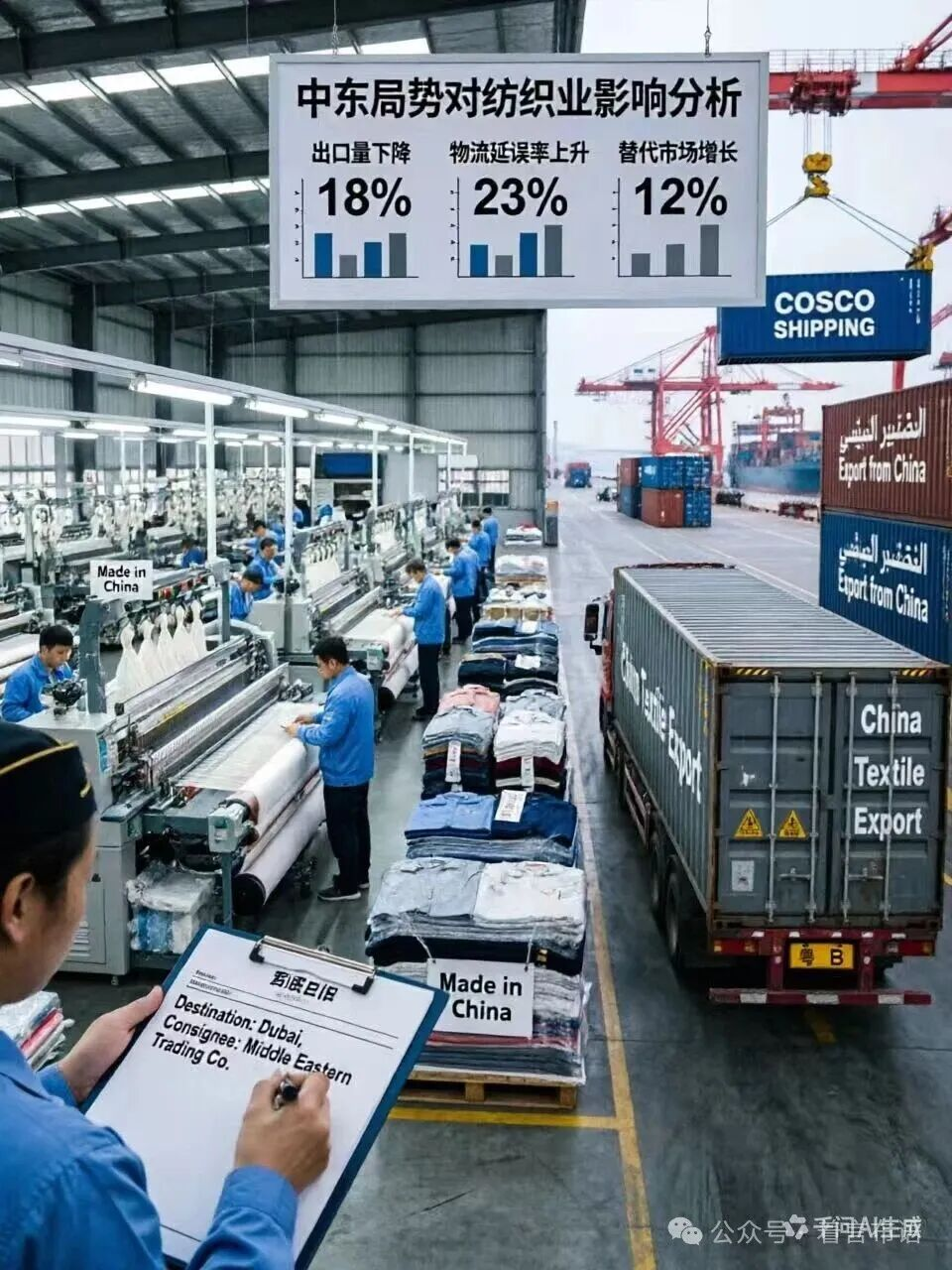
Undercurrents in Costs: The "Butterfly Effect" of Soaring Oil Prices
The textile and apparel industry is a typical energy-dependent industry, with over 90% of its synthetic fiber raw materials (such as polyester and nylon) derived from petroleum derivatives. Therefore, the turmoil in the Middle East directly impacted the industry's cost lifeline. As the conflict escalated, international oil prices once exceeded $82 per barrel, reaching a new high since 2025.
This cost pressure quickly spread along the supply chain:
• Raw materials across the board surged: Prices of core raw materials such as PX, PTA, and ethylene glycol rose sharply. Data shows that the price of polyester staple fiber has increased by 800 yuan per ton within a month, with some polyester raw materials seeing price increases of over 13%, and the prices of dyes and chemical auxiliaries also rising accordingly.
• Squeezed Profit Margins: For small and medium-sized textile enterprises with already thin profit margins, raw material costs account for 60%-70% of production costs. This round of price increases has directly compressed their profit margins by 5%-15%, leaving many enterprises in a predicament of "losing money if they take orders, or going bankrupt if they don't."
• Cotton Sees a Turnaround: The significant increase in chemical fiber costs has highlighted the substitution advantage of cotton. Against the backdrop of a changing cotton-polyester price ratio, cotton textile enterprises are anticipating a recovery in demand, further strengthening the long-term support logic for the domestic cotton market.
Logistics Bottlenecks: The "Life-or-Death Race" Caused by Shipping Detours
The Strait of Hormuz is the choke point for approximately 20%-30% of global seaborne oil trade and a crucial passage on the Asia-Europe route. With escalating navigational risks, shipping companies are forced to detour around the Cape of Good Hope in Africa, posing unprecedented logistical challenges to China's textile and apparel exports.
• Soaring Freight Rates: Detours add 15-20 days to the journey, causing ocean freight rates to surge by 150%-250%. Furthermore, war risk insurance rates have skyrocketed by 300%-500%, with exorbitant logistics costs eroding already thin profit margins.
• Delivery Default Risk: Severe delays in shipping schedules directly lead to a significant increase in the risk of order delivery delays. Many companies face order cancellations or claims from customers, even experiencing the dire situation of "customers lost before goods arrive at port."
• Settlement and Payment Obstacles: The uncertainty of shipping routes, coupled with stricter compliance reviews by banks for Middle Eastern operations, has led to frequent cross-border payment delays, account audits, and compliance-related payment refusals, exacerbating unprecedented cash flow pressures on businesses.
Trade Game: The "Two Choices" of Secondary Tariffs and Markets
Beyond the explicit cost and logistical impacts, the Middle East conflict has triggered complex trade barriers and changes in the market landscape.
• The "Sword of Damocles" of Secondary Tariffs: The US announced a 25% "secondary tariff" on any country doing business with Iran. This put Chinese textile companies in a dilemma: if they continue trade with Iran (such as importing high-quality long-staple cotton or exporting textile machinery), their exports to the US will face additional penalties. This situation, where "choosing Iran could mean losing the US," forces companies to make difficult choices between the two major markets.
• Uncertainty on the Demand Side: The conflict not only disrupted local markets but also brought planned business activities (such as Eid al-Fitr purchases) to a standstill. Meanwhile, overseas brands are still in a destocking cycle, with large long-term orders decreasing and short-term, quick-response orders becoming the mainstream, further exacerbating export uncertainty.
Conclusion
The smoke of war in the distance may eventually dissipate, but for those in the textile industry, the spinning wheel will never stop turning. The Middle East turmoil of 2026 was not only an extreme test of the industry's cost control capabilities, but also a profound examination of its globalization strategy and supply chain resilience. In this process of natural selection, only those companies that can keenly perceive changes, flexibly adjust strategies, and continuously innovate and upgrade will be able to weather the cycle and usher in their own spring.
News
Hot News
Contact Us
-
Phone:+86-519-83388368、86-13775633505
-
Fax:+86-519-83388368
-
Email:admin@yongxushengmachine.com