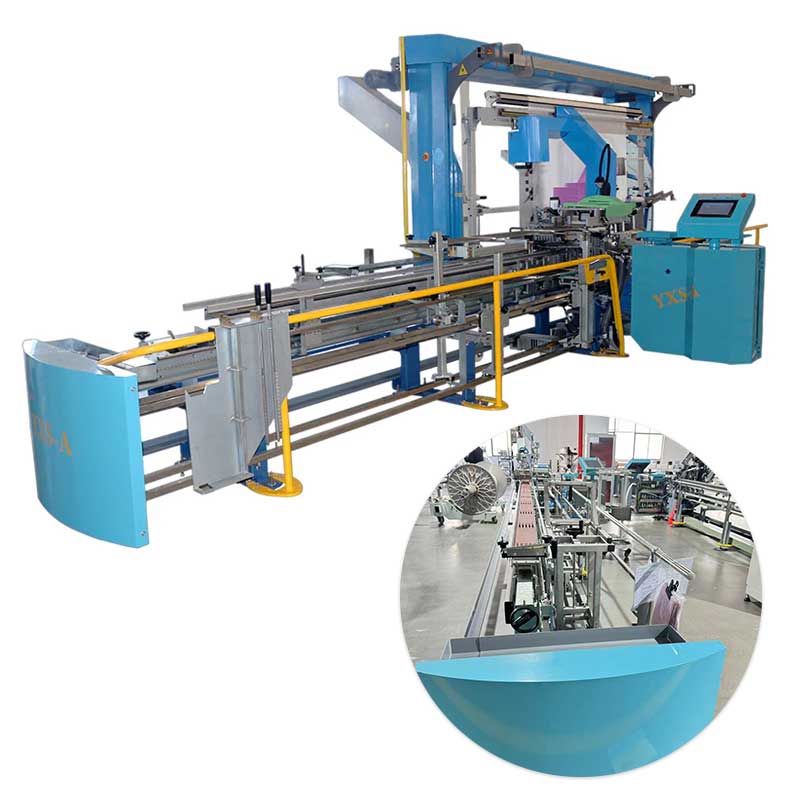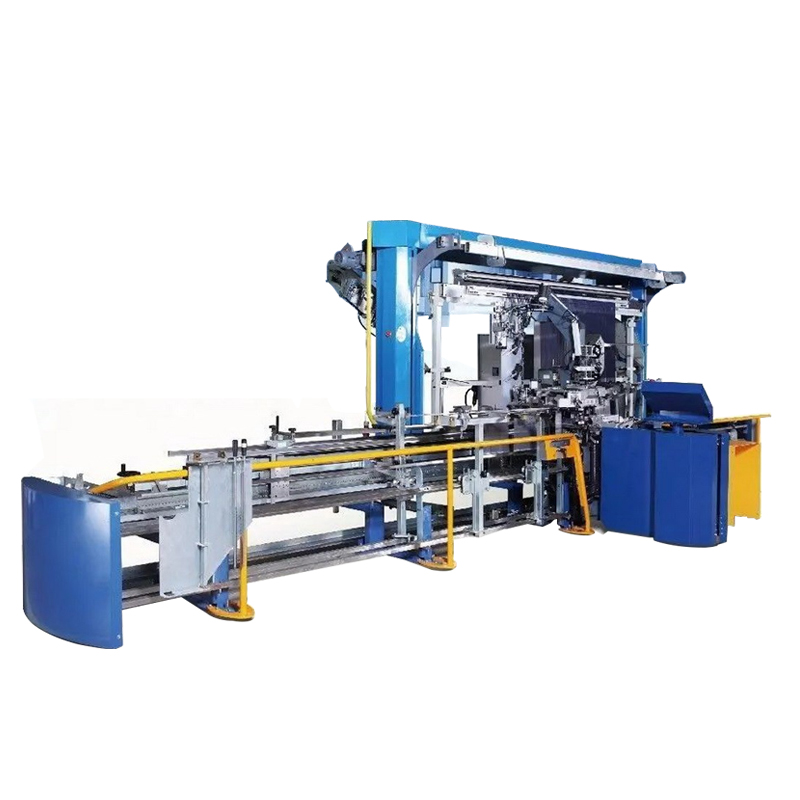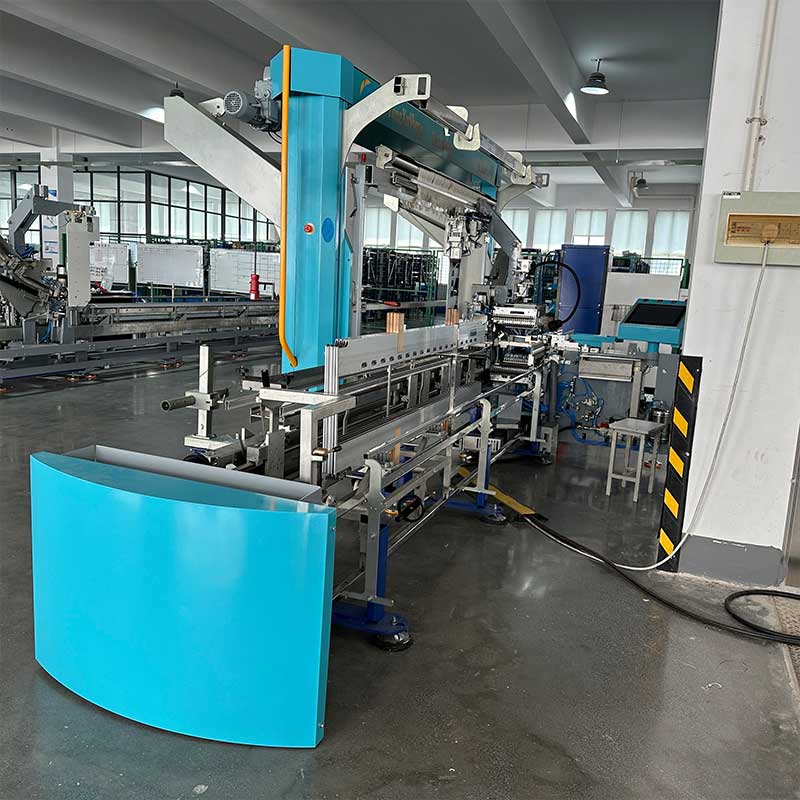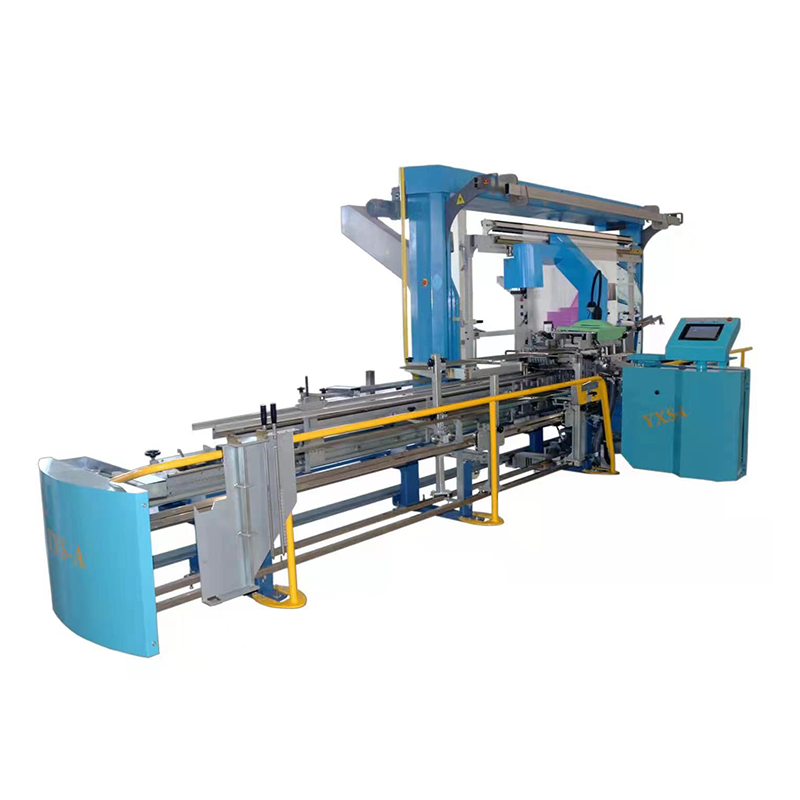


Product recommendation
Reed Insertion Process
Work Content: Inserting stop warp supports, inserting heddles, inserting reeds.
1) Stop Warp Support: A component of the automatic stop device for warp breakage on a loom. Each warp yarn is inserted into a stop warp support. When a warp yarn breaks, the stop warp support falls, causing the automatic stop device to shut off the loom.
2) Heddle Frame: A component of the shedding mechanism on a loom, consisting of a heddle frame and heddles.
3) Reed: Its function on a loom is to determine the fabric width and warp density, provide a guide surface for the weft carrier to pass through the weft hole, and drive the weft yarn towards the weft hole. Reed Classification: Plain reed, used in rapier looms. Shaped reed, used in air-jet looms.
Loom Classification
1) Looms are classified by weft insertion method: Shuttle looms and shuttleless looms.
2) Shuttleless loom classification: Air-jet looms, water-jet looms, rapier looms, and rapier looms. Air-jet looms – use airflow to guide the weft yarn, high speed.
Rapier looms – use rapiers to hold the weft yarn for weft insertion, jacquard weaving, wide adaptability.
Water-jet looms – use water flow to guide the weft yarn, water-repellent synthetic fiber weaving, high speed.
Roller looms, etc. – use a shuttle to guide the weft yarn. Wide width.
Five major movements of a loom: Shedding, weft insertion, beat-up, take-up, and warp feed.
Shedding Movement
1) Classification of shedding mechanisms: crank, cam, multi-arm (mechanical, electronic)
2) Function of the shedding mechanism: On a loom, to interweave warp and weft yarns into fabric, the entire width of warp yarns must be divided into upper and lower layers according to the fabric structure requirements, forming a spatial channel—the shed—for the weft yarn to be introduced and interweave with the warp yarns.
3) Purpose of shedding movement: To cause the warp yarns entering the heddle to move up and down to form a weft opening for the weft yarn to be introduced.
4) Our company currently uses the following weft insertion methods for looms: crank-type weft insertion, cam-type weft insertion, mechanical dobby weft insertion, and electronic dobby weft insertion.
Weft Insertion Movement: After the loom's weft insertion mechanism forms the weft hole, the weft feeder introduces the weft yarn along the reed direction into the weft hole.
1) Weft Feeder
Looms named according to different weft feeders:
① Air-jet looms: Weft insertion is achieved through a relay of main and auxiliary nozzles, with a special-shaped reed guiding the airflow and weft yarn.
② Rapier looms: Rapiers are divided into rigid rapiers and flexible rapiers. Rapier loom weft insertion mechanism includes: weft feeder, weft selector, rapier pulley, rapier belt, left rapier head, and right rapier head.
2) Other Components
① Function of the weft feeder: To avoid tension fluctuations when the weft yarn is directly unloaded from the bobbin, ensuring consistent tension for each weft yarn introduced into the shed, thereby reducing weft breakage and improving fabric quality.
② Function of the special-shaped reed: To prevent airflow diffusion.
③ Major defects related to weft insertion: weft shrinkage, missing weft.
Strike-up motion: On the loom, the weft yarn introduced by the weft carrier is pushed towards the weft hole, interweaving with the warp yarns to form a fabric that meets design requirements.
1) Components of the strike-up mechanism: reed seat, reed.
2) Reed classification: plain reed, irregular reed.
3) One stroke of the motor completes one strike-up.
4) Defects related to strike-up: broken weft, streaks.
Take-up motion: The motion of regularly drawing the fabric away from the weft hole and winding it onto the take-up roller. The speed at which the fabric is drawn away from the weft hole and wound onto the take-up roller determines the geometric density of the weft yarns in the fabric; a faster speed results in a lower weft density, and vice versa. Improper coordination of the take-up mechanism will lead to uneven weft density and other weaving defects.
1) The weft density teeth determine the weft density.
2) Function of edge supports and edge support rods: To ensure stability of weave and width.
3) Classification of edge supports: Top-press type, bottom-lift type.
4) Weaving defects related to take-up: Color streaks, edge support defects, cloudiness.
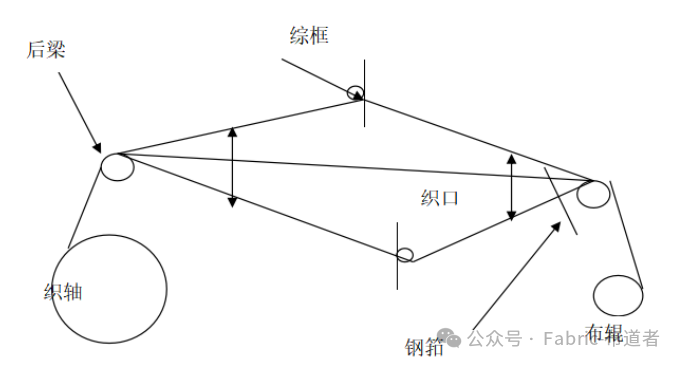
Warp Feeding Movement: The movement of feeding warp yarns on the loom is called warp feeding movement. Each time a weft is introduced, a certain amount of warp yarn is fed, providing a certain tension to meet the requirements of opening the shed and tightening the weft yarns, resulting in a fabric with a certain tightness and structure.
1) Warp feeding mechanism: Warp beam gear, warp beam, back beam, stop warp pads.
2) The amount of warp feed is determined by the amount of take-up.
3) Function of the back beam: To change the direction of the warp yarns, adjust the tension difference of the sizing layer at the weave point, and adjust the amount of warp yarn tension fluctuation.
4)Principle of stop warp pads: Each warp yarn has a stop warp pad. When a warp yarn breaks, the stop warp pad falls, making the warp-stop path a continuous path, and the loom stops.
Performance of Air-Jet Looms
Adaptability of Air-Jet Weft Insertion
1) Air-jet weft insertion uses air, which has very low inertia, as the weft insertion medium, resulting in high machine speeds and a weft insertion rate of up to 2000 m/min, achieving high speed and high output.
2) With the rapid development of air-jet weft insertion technology, its adaptability to various fabric types and product quality have also improved accordingly. It can be used to process various fabrics, from lightweight to heavyweight. Four weft yarn colors can be selected, and the raw materials are mainly staple fiber yarns and chemical fiber filaments. Air-jet weft insertion is particularly suitable for processing thin fabrics and has significant advantages in producing low-density, high-gain monochrome fabrics.
Advantages and Disadvantages of Air-Jet Looms
1) Compared with rapier and projectile weft insertion, air-jet weft insertion has a simpler structure, less vibration, and can use non-separable reed seats and linkage weft insertion mechanisms. Therefore, air-jet looms are cheaper and have lower investment costs.
2) Air-jet weft insertion offers high output and good quality, making it very suitable for the production of a wide range of monochrome fabrics, resulting in good economic benefits.
3) Air-jet weft insertion is a passive weft insertion method. The airflow lacks sufficient control over certain weft yarns (such as heavy knotted yarns and fancy yarns), easily leading to weft insertion defects. Air-jet weft insertion requires high clarity of the warp shed; no weft yarn should obstruct the weft insertion channel, otherwise it can easily cause weft stoppage and affect efficiency. It should be noted that the high speed and warp tension characteristics of air-jet weaving place high demands on the quality of the raw yarn and the quality of the semi-finished products in the preparation process.
Performance of Rapier Looms
Classification of Rapier Weft Insertion
1) Rapier weft insertion utilizes the reciprocating motion of the rapier to controllably guide the weft yarn into the shed to complete the weft insertion process. Rapier weft insertion has advantages such as simple structure, stable operation, low noise, stable weft insertion quality, and suitability for multi-colored weft yarns and wide-width weaving, thus it is widely used.
2) Rapier weft insertion is divided into single rapier and double rapier types. Single rapier weft insertion uses a single rapier to guide the weft yarn from one side of the shed to the other. Double-rapier weft insertion is accomplished by two rapiers located on either side of the shed working together. One rapier feeds the weft yarn to the middle of the loom, called the feed rapier, while the other rapier receives the weft yarn from the middle of the feed rapier and leads it out of the shed, called the receiving rapier.
3) According to the structural characteristics of the rapiers, they are divided into rigid rapiers and flexible rapiers.
4) According to the way the rapiers hold the weft yarn, they are divided into fork-in type weft insertion and clamping type weft insertion. Fork-in type introduces two wefts at a time, with a simple rapier head structure, but the weft yarn slides across the rapier head during insertion, causing wear and tear, resulting in high tension on the tight edge of the weft yarn and a tendency to break, as seen in canvas weaving. Clamping type uses a special clamp structure on the rapier head to clamp the weft yarn end for insertion and exit from the shed, introducing a single weft at a time.
Technical characteristics of rapier weft insertion:
1) During the weft yarn exchange (around 175°), the feed rapier and receiving rapier have a speed of 0, which is beneficial for a smooth exchange, but the acceleration is high at this time, which can cause flexible impact. The feed sword exits the shed earlier to reduce friction on the warp yarns; the weft insertion sword exits later to allow the warp heddles to clamp the weft yarn, preventing it from shrinking back. When the feed and insertion swords fully advance, there is an overlap between their gripping points, called the transition stroke. The size of this transition stroke is determined by the sword head structure. The feed sword enters later than the insertion sword, and the difference in spindle angle Δa between the two moments is approximately 5-10°. This ensures that in the transition area, since the insertion sword has already begun to retreat while the feed sword continues to move forward, the feed and insertion swords move in the same direction and are relatively stationary. This minimizes the impact on the weft yarn during transition, while the forward movement of the feed sword maintains tension on the weft yarn, reducing the likelihood of transition errors.
2) Rapier weft insertion has several characteristics: Because excessively fast weft insertion can easily cause short weft threads and damage to machine parts, the rapier head spends a relatively long time moving in the shed, occupying 200°–250° of the main shaft rotation angle; the rapier head enters the shed at approximately 60°–90° and exits at approximately 280°–290°, resulting in a small adjustable range for entry and exit. The parameters that need adjustment mainly include the initial position of the rapier head, the rapier head stroke, weft yarn interleaving conditions, and the timing of weft cutting and release.
Rapier weft insertion's adaptability to different product types:
1) Rapier weft insertion uses the rapier head to hold the weft yarn, keeping the weft yarn completely under control; this is an active weft insertion method. A well-designed rapier weft insertion mechanism ensures the rapier head moves with an ideal motion pattern. Combined with the use of a weft feeder, this minimizes the tension on the rapier head during yarn clamping, weft insertion, and weft yarn crossing. This is clearly advantageous for weaving fine yarns, low-strength yarns, or low-twist yarns, thus guaranteeing a lower weft breakage rate and higher loom efficiency. Rapier weft insertion is widely used in both wool and fine wool weaving, resulting in better production efficiency and product quality. Compared to shuttle looms, it doubles the loom speed and largely avoids common defects such as skipped stitches and weft slippage. In high-twist yarn weaving, it suppresses the formation of untwisting and weft shrinkage defects.
2) Most rapier looms have highly versatile rapier heads, adaptable to weft yarns of different raw materials, thicknesses, and cross-sectional shapes. Therefore, rapier weft insertion is particularly suitable for processing decorative fabrics where the weft direction uses coarse or fine fancy yarns or alternating coarse and fine yarns to form thick and thin stripes, as well as high-end fabrics with different layers and textures created by jacquard weaving—something difficult to achieve with other weft insertion methods.
3) Due to its excellent weft hold and low tension, rapier weft insertion is also widely used in the weaving of natural fibers and rayon, as well as in the production of terry fabrics.
4) Rapiers have extremely strong weft selection capabilities, allowing for easy weft changing of up to 16 different weft yarns, making them particularly suitable for multi-color weft weaving. They are widely used in the processing of decorative fabrics, woolen fabrics, and yarn-dyed fabrics, meeting the characteristics of small-batch, multi-variety production.
Please visit product page for more information
-
- Textile factory's automatic threading machines and other textile machinery accessories have been widely used in many markets at home and abroad.
- Textile factory's automatic threading machines and other textile machinery accessories have been widely used in many markets at home and abroad.
- 280 Type C Simplex Column Steel Healds wires For Automatic Drawing-In Machine
- Heddle And Open Drop Wires 165*11*0.3 For Weaving Machine Spare Parts
-
- Yongxusheng Automatic Warping Machine Product Introduction
- This new Chinese-style vest worn by Elon Musk's son is trending online, showcasing the biggest trend of Chinese fashion.
- Is the fabric not strong enough? Don't always blame the yarn; it's most likely a problem with the finishing process.
- Yarn dyeing process - bleaching