

Yarn dyeing process - bleaching
2026-04-21
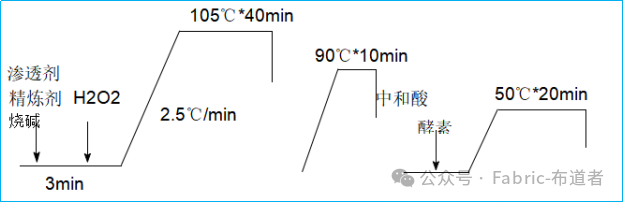
Dyeing process flow: (taking T/C and CVC yarns as examples)

Bleaching process
1) Auxiliaries:Refining agent (degreasing, refining, improving yarn whiteness and capillary effect) ① BF5527 three-in-one Penetrating agent (allows other auxiliaries to quickly penetrate into the fiber) Hydrogen peroxide stabilizer (allows hydrogen peroxide to decompose slowly, making the whiteness of the bleached material uniform) ② NaOH caustic soda (48°Bé): the main auxiliary agent for removing impurities and boiling (for alkali-sensitive fibers, use soda ash)
③H2O2 (30%): Used for bleaching, improving the whiteness of fabrics and removing impurities. ④Urea: A co-solvent that increases the solubility of dyes. It can form hydrogen bonds with dye molecules, weakening the intermolecular forces and making them easier to dissolve.
2)Functions: Removes natural substances contained in fibers through chemical and physical-mechanical actions. These substances are classified as follows: ①Natural impurities: pigments, waxes, minerals, etc.; ②External impurities: cottonseed hulls, oil stains, etc.; ③Pectin: decomposed into soluble substances by caustic soda; ④Nitrogenous substances: partially removed by warm water; ⑤Waxy: saponification; ⑥Ash: acid washing; ⑦Pigments: removed by the action of H2O2 and boiling water washing.
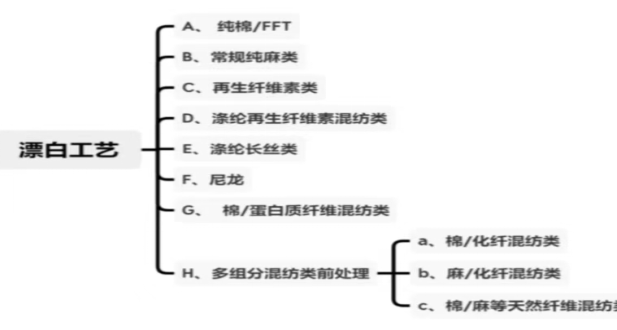
3) Pretreatment processes for various fibers: ①Pure cotton/FFT: The pretreatment of pure cotton mainly involves scouring and bleaching, a one-bath scouring and bleaching process. The pretreatment process conditions, such as the amount of auxiliary agents, heating rate, pretreatment temperature, and holding time, vary depending on the yarn type. For some varieties whose whiteness does not meet customer requirements, special processes such as double bleaching will be used. The main indicators before and after use include pre-treatment whiteness (around 80), capillary action (over 10cm after 30 minutes), strength, and hydrogen peroxide content (0).
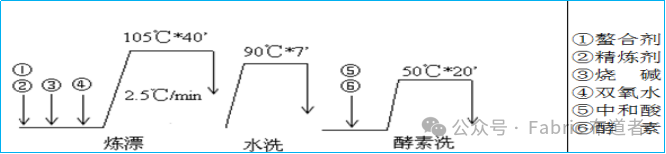
Double bleaching process

② For conventional pure linen (21 count and below), the linen raw yarn used has already undergone previous processing. However, there are differences in whiteness between different batches of raw yarn and between different yarns. In order to ensure the uniformity of pretreatment, the dyeing process will bleach the yarn. During bleaching, in order to retain the strength of the yarn and facilitate subsequent processing, an extraction-based bleaching process is adopted.
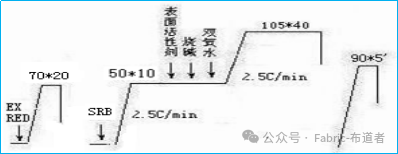
Blends of natural fibers such as cotton and linen undergo a one-bath pretreatment process before scouring and bleaching.
News
Hot News
Contact Us
-
Phone:+86-519-83388368、86-13775633505
-
Fax:+86-519-83388368
-
Email:admin@yongxushengmachine.com