


Textile Knowledge: Sun Protection and Finishing.
2026-06-29
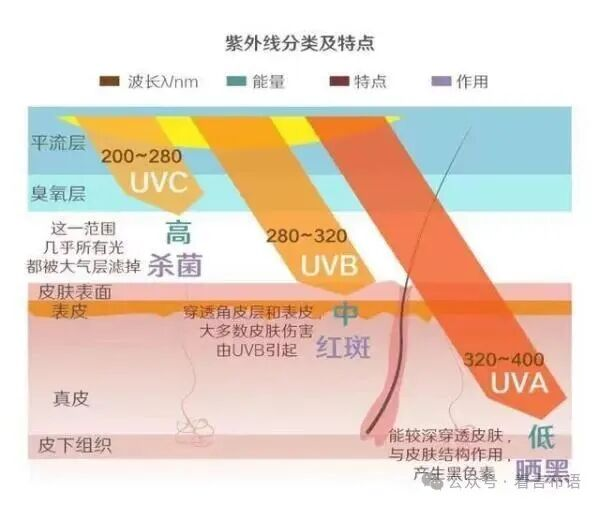
As the rainy season ends and the dog days of summer begin, sun protection will become the top priority for everyone when going out. But do you know how much UV radiation a UPF50+ sun protection clothing actually blocks? The expensive sun protection clothing you buy may not even meet the national standard for sun protection. In 2025, CCTV exposed a batch of substandard sun protection clothing: the packaging prominently displayed UPF50+, but the actual UV protection factor was far below the national standard. Even more outrageous, some merchants can buy "tailor-made" test reports for a few hundred yuan, labeling the UPF level however they want. From 45.9 billion yuan in 2016 to 95.8 billion yuan in 2026, it has more than doubled in ten years. 95.8 billion yuan—this is the projected size of China's sun protection clothing market in 2026.
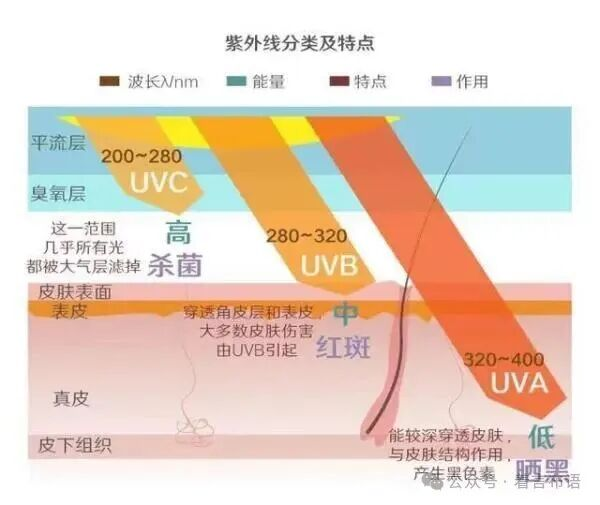
First, let's look at what UPF actually is. UPF (Ultraviolet Protection Factor) is the ratio of the amount of ultraviolet radiation received by the skin when not wearing clothing to the amount received when wearing fabric. For example, UPF 50+ means that only 1/50 of ultraviolet rays can penetrate the fabric, equivalent to the fabric blocking 98% of ultraviolet rays. The national standard GB/T 18830-2009 stipulates that a product can only be called a "UV-protective product" if both conditions are met simultaneously; neither condition can be lacking. Even if the UPF value meets the standard, if the UVA transmittance exceeds the standard, it still cannot be called a UV-protective product: 1. The UPF value must be greater than 40. 2. T(UVA)AV must be less than 5%, meaning the long-wave ultraviolet transmittance must be less than 5%.
So, does our fabric itself have sun-protective properties? Yes, ordinary fabrics inherently possess sun-protective properties; otherwise, you wouldn't see a noticeable color difference between your forearm and upper arm after wearing a short-sleeved T-shirt all summer. However, different fabric compositions vary greatly. Below is a test conducted by the Beijing Inspection and Quarantine Technology Center:
UPF, as stated above, is a UV blocking rate. The national standard GB/T18830 stipulates that a minimum UPF of 40+ is required to be considered a UV-protective product. This equates to 1/30 = 2.5%, or a blocking rate of 97.5%. Note the last point—the national standard stipulates that products with a UPF greater than 50 are uniformly labeled as UPF50+, and anything higher is only labeled 50+. Labels like UPF100 and UPF2000 are not allowed. Those livestreamers shouting "UPF100+" or "UPF2000+" either don't understand the standard or are deliberately creating numerical anxiety. UPF50+ blocks 98%, and UPF2000 blocks ≥99%—you're paying twice the price for only 1% more UV protection. Whether it's worth it or not, do the math yourself.
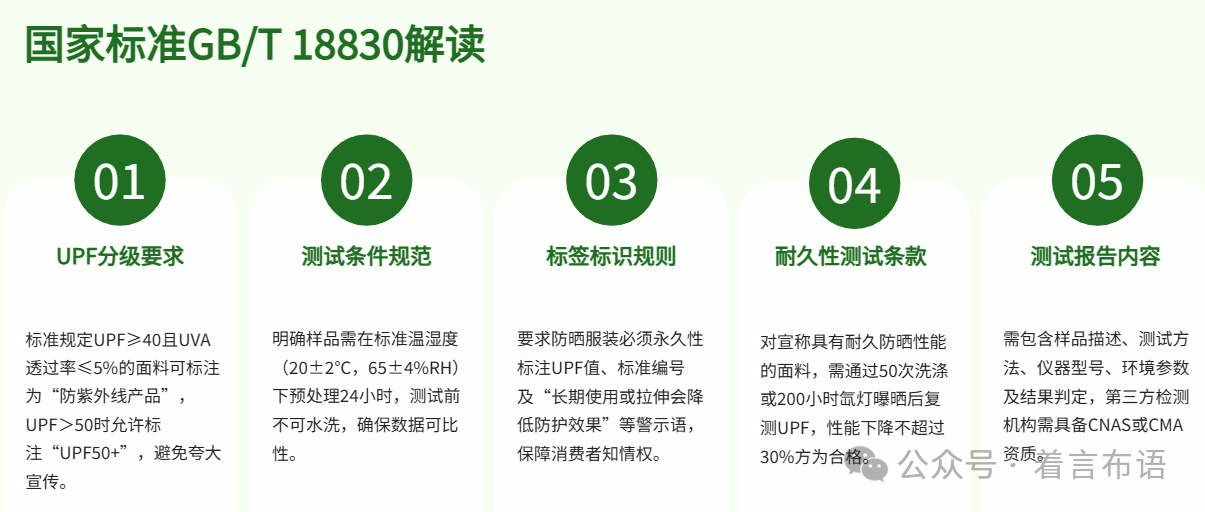
Third, let's examine how the fabric becomes sun-resistant.
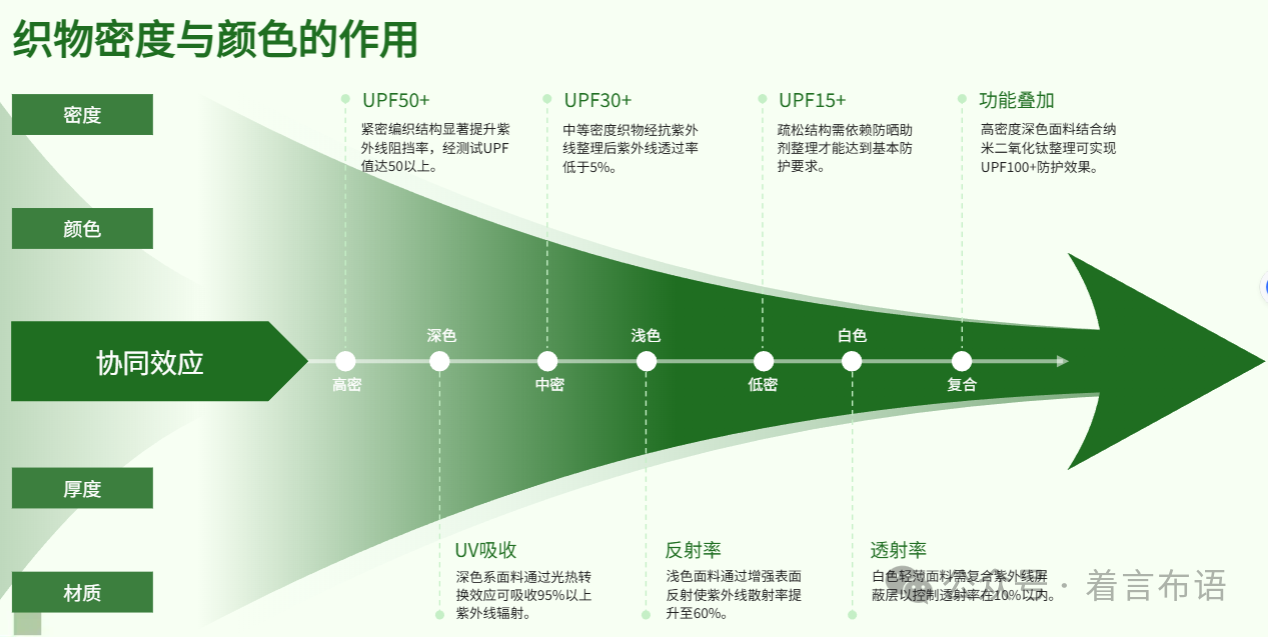
The third point is crucial—the UPF value isn't solely influenced by sun protection finishing. Two other important factors are fabric color and density. For the same fabric, darker colors have a 30% to 50% higher UPF than lighter colors because dye molecules absorb ultraviolet rays. The higher the fabric density and thickness, the harder it is for ultraviolet rays to penetrate, resulting in a higher UPF.
IV. Types of UV-resistant finishing agents: Commonly used UV-resistant finishing agents are divided into three types: organic finishing agents, inorganic reflective finishing agents, and composite finishing agents.
Three ways to identify genuine sun-protective clothing: First, check the hangtag. It must list both UPF and T(UVA)AV values, and specify the applicable standard GB/T 18830-2009. Clothing only listing UPF without UVA transmittance is likely problematic. Second, check the report. The test report number can be verified on the CNAS (China National Accreditation Service for Conformity Assessment) website. If it cannot be found, the report is questionable. Third, feel the fabric. Genuine sun-protective clothing should provide both sun protection and breathability; the fabric should be dense but not stuffy. If a "sun-protective" garment feels like plastic sheeting—congratulations, it does offer sun protection, but it's also not breathable; wearing it is no different from wearing cling film.
News
Hot News

Contact Us
-
Phone:+86-519-83388368、86-13775633505
-
Fax:+86-519-83388368
-
Email:admin@yongxushengmachine.com