


Textile Knowledge Preprocessing
2026-01-15
The fabric dyeing and finishing process can be divided into pretreatment, dyeing, printing, and finishing, depending on the type, specifications, and finished product requirements of the fabric.
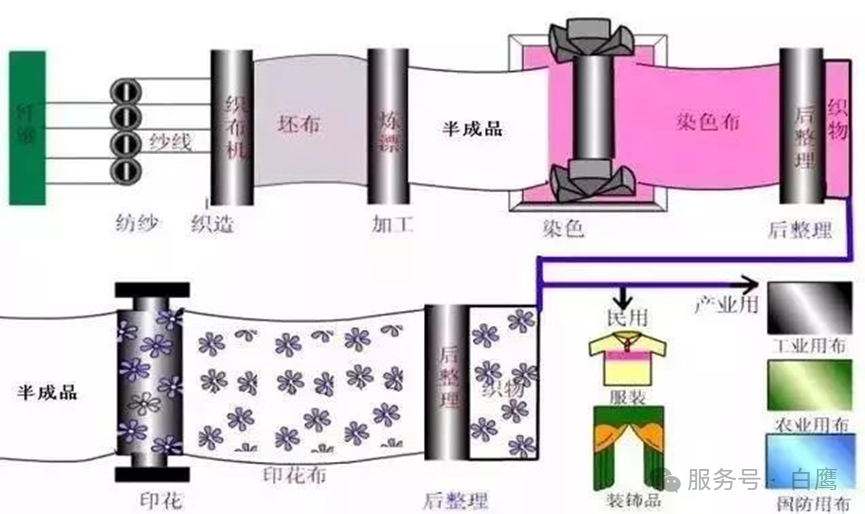
Good pretreatment is half the battle in successful dyeing! Before discussing pretreatment, it's crucial to emphasize batch management of raw fabrics (or yarns). Fabrics from the same batch should be dyed using the same process. When changing batches, a sampling and tracking procedure is essential. After a batch change, the process must be adjusted promptly based on the sample comparison. Good batch management reflects the level of a dyeing plant's quality.
The purpose of pretreatment: To remove impurities from fabrics using chemical and physical-mechanical methods, resulting in white, soft fabrics with good permeability to meet garment requirements and provide qualified semi-finished products for dyeing, printing, and finishing.
Cotton: Raw fabric preparation, singeing, desizing, scouring, bleaching, mercerizing.
Chemical fibers: Raw fabric preparation, refining (liquid alkali, etc.), pre-shrinking, pre-setting, alkali reduction (liquid alkali, etc.).
Singeing Purpose
① Improve fabric luster and smoothness;
② Improve anti-pilling properties (especially for synthetic fabrics);
③ Improve style; singeing makes the fabric crisper and more structured.
2. Desizing Desizing is for sized woven fabrics. During weaving, the warp yarns are subjected to greater tension and friction to facilitate weaving, making them prone to breakage. To reduce warp breaks and improve weaving efficiency and fabric quality, most woven fabrics need to be sized before weaving.
Purpose of Desizing: After sizing, the sizing agent penetrates between the fibers and partially adheres to the warp yarn surface. While improving yarn performance, the sizing agent contaminates the dyeing and finishing solution, hindering the chemical reaction between the fibers and dyes, making dyeing and finishing difficult.
Speaking of desizing, it's necessary to mention the three major sizing agents in the textile industry: starch and its derivatives, polyvinyl alcohol (PVA), and acrylic sizing agents. PVA has been gradually phased out due to environmental concerns, and now most sizing agents used are a combination of starch and acrylic sizing agents.
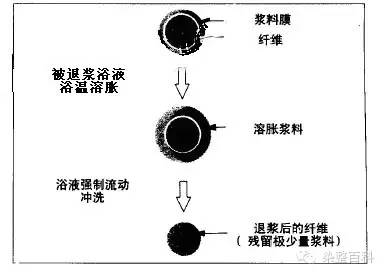
The four most common desizing methods are: hot water desizing, alkaline desizing, enzymatic desizing, and oxidative desizing. Currently, enzymatic and alkaline desizing are more commonly used, with enzymatic desizing (using amylase) primarily targeting starch sizing agents. The effectiveness of desizing is generally evaluated using desizing grades. Among the three major sizing agents, acrylic sizing agents are relatively easy to remove, while starch sizing agents and PVA sizing agents have simple and rapid testing methods (such as the iodine/potassium iodide method).
Insufficient desizing can affect the dye uptake rate during dyeing or cause a deterioration in the fabric's hand feel.
News
Hot News
Contact Us
-
Phone:+86-519-83388368、86-13775633505
-
Fax:+86-519-83388368
-
Email:admin@yongxushengmachine.com